A Song of Ice and Firetakes place in a fictional world in which seasons last for years and end unpredictably. Nearly three centuries before the events of the first novel, the Seven Kingdoms ofWesteroswere united under theTargaryendynasty, establishing military supremacy through their control of dragons. The Targaryens ruled for three hundred years, continuing past the extinction of the dragons. Their dynasty eventually ended with a rebellion led by LordRobert Baratheon, in which Aerys "the Mad King" Targaryen was killed and Robert proclaimed king of the Seven Kingdoms. At the beginning ofA Game of Thrones, 15 years have passed since Robert's rebellion, with a nine-year-long summer coming to an end.
The principal story chronicles the power struggle for the Iron Throne among the great Houses of Westeros following the death of King Robert in A Game of Thrones. Robert's heir apparent, the 13-year-old Joffrey, is immediately proclaimed king through the machinations of his mother, Queen Cersei Lannister. When Lord Eddard "Ned" Stark, Robert's closest friend and chief advisor, discovers that Joffrey and his siblings are the product of incest between Cersei and her twin brother Ser Jaime Lannister, Eddard attempts to unseat Joffrey, but is betrayed and executed for treason. In response, Robert's brothers Stannis and Renly both lay separate claims to the throne. During this period of instability, two of the Seven Kingdoms of Westeros attempt to become independent from the Iron Throne: Eddard's eldest son Robb is proclaimed King in the North, while Lord Balon Greyjoy desires to recover the sovereignty of his region, the Iron Islands. The so-called "War of the Five Kings" is in full progress by the middle of the second book, A Clash of Kings.
The second part of the story takes place in the far north of Westeros, where an 8,000-year-old wall of ice, simply called "the Wall", defends the Seven Kingdoms from supernatural creatures known as the Others. The Wall's sentinels, the Sworn Brotherhood of the Night's Watch, also protect the realm from the incursions of the "wildlings" or "Free Folk", who are several human tribes living on the north side of the Wall. The Night's Watch story is told primarily through the point of view of Jon Snow, Lord Eddard Stark's bastard son.[9] Jon follows the footsteps of his uncle Benjen Stark and joins the Watch at a young age, rising quickly through the ranks. He eventually becomes Lord Commander of the Night's Watch. In the third volume, A Storm of Swords, the Night's Watch storyline becomes increasingly entangled with the War of the Five Kings.
2.Tigana
The plot focuses on a group of rebels attempting to overthrow bothtyrantsand win back their homeland. Many of the rebels are natives of theprovinceof Tigana, which was the province that most ably resisted Brandin: In a crucial battle, Brandin's son was killed. In retaliation for this, Brandin attacked Tigana and crushed it more savagely than any other part of the Palm; then, following this victory, he used his magic to remove the name and history of Tigana from the minds of the population. Brandin named it Lower Corte, making Corte, their traditional enemies to their north, seem superior to a land that was all but forgotten.
Only those born in Tigana before the invasion can hear or speak its name, or remember it as it was; as far as everyone else is concerned, that area of the country has always been an insignificant part of a neighbouring province, hence the rebels are battling for the very soul of their country.
The book puts great emphasis on the different moral shades of people. Though seen by most of the characters as a ruthless, grief-maddened tyrant, Brandin is actually a very sympathetic character, especially in his love for Dianora, one of the women of his harem, called a saishan in the book — a character who is in fact from Tigana herself and engineered her own selection into Brandin's seraglio so that she could assassinate him, only to fall in love with him before she could. Despite being likeable and sympathetic, many of the rebels are equally ruthless in their attempts to overthrow the Tyrants, setting off wars, assassinating soldiers and officials and even committing suicide to depose Brandin. Wiki
Moby-Dick
Moby-Dick; or, The Whale is an 1851 novel by American writer Herman Melville. The book is the sailor Ishmael's narrative of the obsessive quest of Ahab, captain of the whaling shipPequod, for revenge on Moby Dick, the giant white sperm whale that on the ship's previous voyage bit off Ahab's leg at the knee. A contribution to the literature of the American Renaissance, Moby-Dick was published to mixed reviews, was a commercial failure, and was out of print at the time of the author's death in 1891. Its reputation as a "Great American Novel" was established only in the 20th century, after the centennial of its author's birth. William Faulkner said he wished he had written the book himself,[1] and D. H. Lawrence called it "one of the strangest and most wonderful books in the world" and "the greatest book of the sea ever written".[2] Its opening sentence, "Call me Ishmael", is among world literature's most famous.[3]
Melville began writing Moby-Dick in February 1850, and finished 18 months later, a year longer than he had anticipated. Melville drew on his experience as a common sailor from 1841 to 1844, including several years on whalers, and on wide reading in whaling literature. The white whale is modeled on the notoriously hard-to-catch albino whale Mocha Dick, and the book's ending is based on the sinking of the whaleship Essex in 1820. His literary influences include Shakespeare and the Bible. The detailed and realistic descriptions of whale hunting and of extracting whale oil, as well as life aboard ship among a culturally diverse crew, are mixed with exploration of class and social status, good and evil, and the existence of God. In addition to narrative prose, Melville uses styles and literary devices ranging from songs, poetry, and catalogs to Shakespearean stage directions, soliloquies, and asides. In August 1850, with the manuscript perhaps half finished, he met Nathaniel Hawthorne and was deeply moved by his Mosses from an Old Manse, which he compared to Shakespeare in its cosmic ambitions. This encounter may have inspired him to revise and expand Moby-Dick, which is dedicated to Hawthorne, "in token of my admiration for his genius".
The book was first published (in three volumes) as The Whale in London in October 1851, and under its definitive title in a single-volume edition in New York in November. The London publisher, Richard Bentley, censored or changed sensitive passages; Melville made revisions as well, including a last-minute change to the title for the New York edition. The whale, however, appears in the text of both editions as "Moby Dick", without the hyphen.[4] Reviewers in Britain were largely favorable,[5] though some objected that the tale seemed to be told by a narrator who perished with the ship, as the British edition lacked the Epilogue recounting Ishmael's survival. American reviewers were more hostile.[6] About 3,200 copies of the book were sold during the author's life. Wikipedia
The Lord of the Rings
The Lord of the Rings is an epic[1]high fantasy novel[a] by the English author and scholar J. R. R. Tolkien. Set in Middle-earth, the world at some distant time in the past, the story began as a sequel to Tolkien's 1937 children's book The Hobbit, but eventually developed into a much larger work. Written in stages between 1937 and 1949, The Lord of the Rings is one of the best-selling books ever written, with over 150 million copies sold.[2]
The title names the story's main antagonist, the Dark LordSauron, who had in an earlier age created the One Ring to rule the other Rings of Power as the ultimate weapon in his campaign to conquer and rule all of Middle-earth. From homely beginnings in the Shire, a hobbit land reminiscent of the English countryside, the story ranges across Middle-earth, following the quest to destroy the One Ring mainly through the eyes of the hobbits Frodo, Sam, Merry and Pippin.
Although generally known to readers as a trilogy, the work was initially intended by Tolkien to be one volume of a two-volume set along with The Silmarillion, but this idea was dismissed by his publisher.[3][T 2] For economic reasons, The Lord of the Rings was published in three volumes over the course of a year from 29 July 1954 to 20 October 1955.[3][4] The three volumes were titled The Fellowship of the Ring, The Two Towers and The Return of the King. Structurally, the work is divided internally into six books, two per volume, with several appendices of background material at the end. Some editions print the entire work into a single volume, following the author's original intent.
Angels & Demons is a 2000 bestsellingmystery-thriller novel written by American author Dan Brown and published by Pocket Books and then by Corgi Books. The novel introduces the character Robert Langdon, who recurs as the protagonist of Brown's subsequent novels. Angels & Demons shares many stylistic literary elements with its sequels, such as conspiracies of secret societies, a single-day time frame, and the Catholic Church. Ancient history, architecture, and symbology are also heavily referenced throughout the book. A film adaptation was released on May 15, 2009.
After a month of holidays Sherlock discovers that his brother Mycroft has hired him an unusual American tutor named Amyus Crowe. During their first lesson together Sherlock finds a dead body on the Holmes' estate and witnesses the same cloud surrounding the body that Matty had previously seen. He detects a yellow powdery substance around the body and takes a sample of it.
With Matty's help he tracks down a warehouse which has links to one of the deceased, and almost dies in the warehouse when the villains set it alight. Holmes escapes the building, and determines that he must travel to Guildford and locate an expert in exotic diseases who might help identify the yellow substance. He, therefore, sets out with Matty.
A few days later Sherlock is lured to a fair, where he is forced to participate in a boxing match, from which he is kidnapped and interrogated by the unseen Baron Maupertuis until he is rescued by Matty and the pair go to his tutor's home. Knowing that the Baron has left his headquarters, Sherlock, Matty, Crowe and Virginia determine to follow and locate the Baron.
They discover that the Baron is shipping a weapon from a London wharf, and after a series of chases, Sherlock and Virginia are kidnapped to France by the Baron, and further interrogated. The Baron attacks Sherlock as Mr. Surd attacks Virginia. The pair escape and meet up with Crowe and Matty and set out to stop the Baron from trying to destroy the British Army. They find a fort, where Mr. Surd is in. Sherlock engages in a fight with Mr. Surd, and Sherlock kills him by shoving him into a beehive, resulting in multiple stings from angry bees. They throw pollen in the air, and burn it. The fort falls down.
Sherlock wakes up and meets Crowe and Matty and they discuss matters. As he glances outside the window, Holmes sees the Baron passing by his home in a carriage.
The story begins with Sherlock Holmes discovering that Mrs. Eglantine, the housekeeper of Holmes Manor, is blackmailing his Uncle Sherrinford and Aunt Anna into keeping her employed. Sherlock also discovers that Mrs. Eglantine is working for Josh Harkness, the town's sinister blackmailer. Sherlock, along with his best friend Matthew Arnatt, pursue Harkness into a tannery, which is Harkness' base of operations. There, Sherlock and Matty discover a large number of boxes which contain secrets that Harkness uses for blackmail, including the secret of the Holmes family, and destroys them by sliding them into a tannery vat. Sherlock then incapacitates Harkness and turns him in to the police. Sherlock returns home and reveals the news to Aunt Anna and Uncle Sherrinford, prompting them to fire Mrs. Eglantine since she does not have evidence for blackmail.
After that, Sherlock and Matty visit his American tutor, Amyus Crowe and his daughter Virginia. When they arrive at Crowe's cottage, they find it empty and that they are not there. However, Sherlock and Matty discover a clue that points to Edinburgh. Sherlock, Matty, and Rufus Stone (Sherlock's violin tutor) set off to Edinburgh. However, Rufus gets abducted in Newcastle, leaving Sherlock and Matty alone. In Edinburgh, Sherlock decodes a coded newspaper advertisement that leads them to Cramond. But Sherlock and Matty get abducted by a man named Bryce Scobell, who is holding Rufus Stone captive. Scobell tortures Sherlock for information about Crowe's whereabouts. However, Sherlock, Matty, and Rufus escape after Sherlock incapacitates Scobell's men. The trio set off to Cramond, where they find Crowe and Virginia. Crowe reveals that four years ago, Bryce Scobell, who was serving as a lieutenant in the Confederate Army, had led a large massacre against the American Indians. Crowe, who was a bounty hunter at that time, was assigned to hunt down and kill Scobell for causing the massacre. During an ambush against Scobell, Crowe accidentally kills the wife and son of Scobell, who swears revenge against Crowe, who then quits his job and moves to England. With Scobell back to seek revenge, Crowe and Virginia flee from Farnham.
Soon after, Scobell and his men arrive and set fire to Crowe's hideout, causing the five of them to move out into the open. They escape, but get separated (with Sherlock and Virginia together and Crowe, Rufus, and Matty together in the other group). Sherlock and Virginia find a shelter, where they spend the night. The next morning, Sherlock and Virginia get kidnapped by a local criminal gang called the Black Reavers. They are taken to a warehouse, where they find Crowe, Rufus, and Matty. The leader, Gahan Macfarlane, reveals that he was hired by Scobell to capture the group and return them to Scobell. Sherlock offers a deal: He will prove the innocence of Macfarlane's sister, who is accused of murder, in exchange for their release. After Sherlock succeeds, he returns to Macfarlane's base, where Scobell arrives.
As Scobell is about to kill Crowe and Virginia, Sherlock incapacitates Scobell, initiating chaos. Sherlock sets loose a bear, which kills Scobell. After that, Sherlock, Matty, Crowe, Virginia, and Rufus return to Farnham.
Young Sherlock Holmes: Snake Bite
From Wikipedia, the free encyclopedia
Summary
There
is a Diogenes club in a building where people have to remain quiet or
otherwise they might get kicked out. Amyus Crowe and Mycroft Holmes
arrive into the building and then they find out that Sherlock has been
kidnapped into a ship called Gloria Scott by the Paradol Chamber.
There, Sherlock Holmes is like a worker who cleans the ship. He meets a
friend, Wu Chung who is the cook. There, he learns to cook, Tai chi chuan
which was vital when pirates invaded the ship. The ship was on its way
to Shanghai, China and later on, it would return to England. He also
befriended the Mackenzies and Jacobus Arrhenius. The Mackenzies
consisted of Cameron Mackenzie, his father Malcolm Mackenzie, and Mrs.
Mackenzie. In Arrhenius cabin, he spotted a bag. Then, all of them land
in Shanghai and Sherlock roams around and then spies on the father,
Malcolm suspiciously disguised as a Chinese rice planting farmer. After
spying on him, Sherlock can't come to any conclusions. Then, Wu Chung
gets sick and he dies. His wife and his son, Wu Fung-Yi tell Sherlock
the news that Wu Chung is killed by snake bite. Sherlock sees that the
way that Wu Chung is killed. The snake had one broken fang and it was
really venomous. Later on, Malcolm Mackenzie is murdered by a snake. The
way that the snake had stung Malcolm was as the exact same way as how
it did for Wu Chung, one broken fang. A doctor, Dr. Forbes sees how he
was stung and so Sherlock and Forbes prospect that the same snake must
have stung the 2 guys and that it was very venomous. Next to Malcolm,
there is a bag that Sherlock saw in Arrhenius's cabin. Sherlock sees
that it is a bag of translucent photos, pictures of spider webs. There,
he sees white spots and then he decides to arrange it and connect the
dots as if though they are geometric shapes, but it turned out to be
gibberish. Then, he decided to place the pictures over a map and read
out the letters to decode it. after decoding, he realizes that there is
attack on USS Monocacy and to avoid the Yangtze River.
Then, Sherlock, Cameron and Wu chumgs son live. It is then revealed
that Amayus Crowe if forced to take on a new pupil and has now asked for
Virginia s hand in marriage.
A Clash of Kings
Plot summary
A Clash of Kings depicts the Seven Kingdoms of Westeros in civil war, while the Night's Watch mounts a reconnaissance to investigate the mysterious people known as wildlings. Meanwhile, Daenerys Targaryen continues her plan to conquer the Seven Kingdoms.
A Storm of Swords is the third of seven planned novels in A Song of Ice and Fire, a fantasy series by American author George R. R. Martin. It was first published on August 8, 2000, in the United Kingdom,[1] with a United States edition following in November 2000. Its publication was preceded by a novella called Path of the Dragon, which collects some of the Daenerys Targaryen chapters from the novel into a single book.
At the time of its publication, A Storm of Swords was the
longest novel in the series. It was so long that in the UK, Ireland,
Australia, Serbia and Israel, its paperback edition was split in half,
Part 1 being published as Steel and Snow in June 2001 (with the one-volume cover) and Part 2 as Blood and Gold
in August 2001 (with a specially-commissioned new cover). The same
division was used in the Polish and Greek editions. In France, the
decision was made to cut the novel into four separate volumes.
Meisha Merlin Publishing, which had previously issued limited, illustrated editions of both A Game of Thrones and A Clash of Kings, was planning to release a similar version for A Storm of Swords in two volumes; however, lengthy delays in the release of A Clash of Kings caused it to lose its publishing rights, which were picked up by Subterranean Press. This edition, illustrated by Charles Vess, was released in the summer of 2006.
A Storm of Swords is also the name of the second expansion to the board gameA Game of Thrones, released in July 2006. Approximately the first half of the novel was adapted for television as the third season of the HBO show Game of Thrones,[4] while the second half became the basis for the series' fourth season,[5] and some elements for the series' fifth season.
This article is about the George R. R. Martin fantasy novel. For the Corpus Christi album, see A Feast for Crows (album).
In May 2005, Martin announced that the "sheer size" of his still-unfinished manuscript for A Feast for Crows had led him and his publishers to split the narrative into two books.[3]
Rather than divide the text chronologically in half, Martin opted to
instead split the material by plot location, resulting in "two novels
taking place simultaneously" with different casts of characters.[3]A Feast for Crows was published months later, and focuses mainly on southern Westeros. The concurrent novel A Dance with Dragons, which focuses on other locations such as the North, the Wall and Essos, was teased to be published the following year, but was delayed and not released until six years later on July 12, 2011.[4] Martin also noted that the A Song of Ice and Fire series would now likely total seven novels.[3]
This article is about the novel. For the episode of the TV series, see The Dance of Dragons.
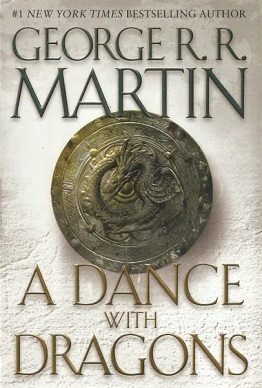
A Dance with Dragons is the fifth novel, of seven planned, in the epic fantasy series A Song of Ice and Fire by American author George R. R. Martin. In some areas, the paperback edition was published in two parts, titled Dreams and Dust and After the Feast. It was the only novel in the series to be published during the eight-season run of the HBO adaptation of the series, Game of Thrones, and runs to 1,040 pages with a word count of almost 415,000.
The US hardcover was officially published on July 12, 2011, and a few weeks later went to No. 1 on both Publishers Weekly and USA Today bestsellers lists. The novel has been adapted for television as the fifth season of Game of Thrones, although elements of the book have also appeared in the series' third, fourth and sixth seasons.
Martin believes the last two volumes of the series will total
over 3,000 manuscript pages. They will take readers farther north than
any of the previous books, and the first of the two will feature the Others. Martin has refrained from making hard estimates for the final release date of the novel.
The protagonist of the series is twelve-year-old Callum (Call) Hunt [3]
who was raised by the mage Alastair Hunt, who after the third mage war
with 'The Enemy of Death' also known as Constantine Madden, and the
death of his wife Sarah at the Cold Massacre, decided to spurn magic and
raised up Call to be the same. Call participates in a test to see
whether he has sufficient magic to attend the magisterium and train to
be a mage using the four elements fire, water, air and earth.
In the book two, 'The Copper Gauntlet', Call finds that his father
may be trying to destroy both him and Havoc and runs away from home to
go back to the magical world. When he leaves his house he notices a
design of what appears to be a copper gauntlet. He meets up with his
friends Aaron and Tamara at Tamara's house. There, he meets Alex
Strike, the boyfriend of Tamara's sister, Kimiya. Call finds out from
Tamara's parents that his dad used to be an exceptional metal mage.
They go back to the Magisterium when they find out that an attack was
made on a dangerous weapon called the Alkahest. They research the
Alkahest and discover that it's the copper gauntlet that Call's dad,
Alastair was researching. The Alkahest is a weapon that can only harm a
Makar and can be used to rip out the Makar's soul. Call predicts that
his dad faked an attack on the Alkahest so that they'd move the Alkahest
to a more secure vault made of metal. He concludes that Alastair wants
to use the Alkahest on Call to destroy Constantine's soul and
potentially kill Call. He tells Tamara about his dad potentially trying
to steal the Alkahest. Tamara misunderstands Call's concerns and
thinks that Alastair wants to use the Alkahest to kill Aaron. She tells
Master Rufus this and later, it is confirmed that the Alkahest is
missing. Alex Strike tells Call that the mages will not hesitate to
kill his dad to protect the Makar, Aaron, so Call decides to set out to
find and warn his dad. Tamara and Aaron agree to go with him, and
because Jasper catches them, they force Jasper to come along with them.
They stop at a junkyard where they think Calls father may have been and
they find letters from Master Joseph, to his father that describe his
location using coordinate points. That night, they wake up to find a
metal elemental named, Automotones. Automotones was controlled by the
school, and after defeating it they decide that they can not return to
the Magisterium. They are found by the Masters on the highway, and the
Masters use air elementals to take control of their car and carry them
away. Call and the others escape the car and hide out and rest in a
cave, made by Aaron. The next day they are surrounded by Chaos-ridden.
Instead of killing them, the Chaos-ridden kneel in front of Call and
Call is forced to explain his identity to everyone there. They are
escorted by the army to the coordinate points which turns out to be a
tomb. In the tomb, it is revealed that Constantine's body is still
intact and that Joseph plans to transfer the soul from Call's body to
Constantine's body. His plans are quickly foiled though, as Alastair
quickly steals the Alkahest and destroys Constantine Madden's body,
therefore foiling the plan to transfer the souls. Because of
Constantine's death, Call receives the chaos magic in Constantine's body
and becomes a Makar. They quickly escape, and bring along Constantine's
head as proof they killed the "Enemy", but his soul was still living
inside Call. When they get back, they are praised as heroes, but a
shocking fact is revealed. Nobody from the Assembly sent the elementals.
In the third book, 'The Bronze Key', the action starts shortly after the
ending of the second as Call, Aaron and Tamara are beginning their
third or bronze year at the Magisterium. The book picks up the story
with a death among the students and a spy on the loose threatening Call.
The group is invited to a party in their honor, where two tragic
incidents occur. First, Call is almost killed by a falling chandelier
when he is invited to a room by Celia with a note, but it is not as it
seems. A few minutes later, he sees Jennifer, the person who delivered
the note, dead in the water. This throws the party into chaos, and
everybody starts to evacuate. Call's dad takes the children to the
Magisterium, where he believes they will be safe. Tamara and Aaron both
believe that the spy, who they think tried to kill Call, is from the
Magisterium, so they both keep an eye on Call 24/7. But that night, when
Call comes to bed he is attacked by an elemental and almost killed if
Aaron didn't step in and send the elemental to the void using his Makar
or chaos powers. They started to investigate themselves and wanted to go
down to the prison where they held the elementals. But to do that, they
would have to break into Anastasia Tarquin's room, Alex's stepmother.
Upon entering Anastasia's room, they discover that the key they look for
is hidden inside a voice-activated safe. After multiple faulty
attempts, Call comes to a realization and enunciates the word that opens
the safe: Jericho. Jericho is the name of Constantine's twin brother,
killed in an accident while they were students. Constantine was driven
to find a method of "curing death" because of the loss of his brother.
After retrieving the key, the trio enter it in the elemental gate, and
as the gates disappear, they rush inside with a purpose. No information
is retrieved from the elementals. Master Rufus surprises them by
announcing that Alma, the leader of the Order of Disorder, will be
teaching Aaron and Call. Aaron and Call make a deal with Alma to help
her free the Chaos-ridden animals if she helps them communicate with the
first victim, Jennifer. Later, Callum and Aaron help free the
Chaos-ridden, assisted by Anastasia Tarquin and Alex Strike. Call
passes out in a truck. When he wakes up, Aaron goes with him to visit
Alma. Alma teaches them how to communicate with the dead. Callum
interrogates Jennifer and finds out that she was killed by a "boy she
liked" and Jennifer starts screaming for Kimiya to stay away. While
trying to figure out more information, Callum accidentally raises her
from the dead and Alma becomes suspicious of him. Call runs back to the
hospital to find out that Tamara has left. They head back to their
rooms when Alex rushes through the gates and alerts them that Tamara was
kidnapped by the spy, and Havoc ran off into the woods surrounding the
Magisterium. After running with Alex for a while, Call asks Alex to take
off his hoodie. Upon seeing two blue stripes up his sleeve, (which Call
recognizes from a photograph of Constantine and Master Joseph) Call
realizes that Alex is indeed the spy in the Magisterium, working for the
Enemy of Death. Alex drags the pair to his hideout in the woods and
extracts the Chaos from Aaron's body using the Alkahest, killing him in
the process. After subduing Call and Tamara, Alex escapes with wounds
inflicted by Havoc. The masters arrive, and in Call's desperation rant
about how he didn't do it, he mentions that he is the Enemy of Death,
and the Masters "clap him in chains" He is taken to the Panopticon, the
prison, and as the book ends, Anastasia Tarquin is at Call's cell door,
telling him she shall free him, and that he is her "son" as she was
Constantine's mother.
The fourth book begins in The Panopticon, where Call stands in
the last half of the year. Jasper is visiting him, but Tamara and
Anastasia Tarquin help Call to go off The Prison at the same time.
Master Joseph then forces Call to bring Aaron back from the dead, but he
ends up being a skewed and different version of Aaron. Jasper and
Tamara escape the clutches of Master Joseph and alert the Magisterium as
to the whereabouts of Call. Preparing for war,
Pancake A pancake (or hotcake , griddlecake , or flapjack , not to be confused with oat bar flapjacks ) is a flat cake, often thin and round, prepared from a starch-based batter that may contain eggs, milk and butter and cooked on a hot surface such as a griddle or frying pan , often frying with oil or butter. Archaeological evidence suggests that pancakes were probably the earliest and most widespread cereal food eaten in prehistoric societies. [1] The pancake's shape and structure varies worldwide. In the United Kingdom, pancakes are often unleavened and resemble a crêpe . [2] In North America, a...
 A Song of Ice and Fire takes place in a fictional world in which seasons last for years and end unpredictably. Nearly three centuries before the events of the first novel, the Seven Kingdoms of Westeros were united under the Targaryen dynasty, establishing military supremacy through their control of dragons. The Targaryens ruled for three hundred years, continuing past the extinction of the dragons. Their dynasty eventually ended with a rebellion led by Lord Robert Baratheon, in which Aerys "the Mad King" Targaryen was killed and Robert proclaimed king of the Seven Kingdoms. At the beginning of A Game of Thrones, 15 years have passed since Robert's rebellion, with a nine-year-long summer coming to an end.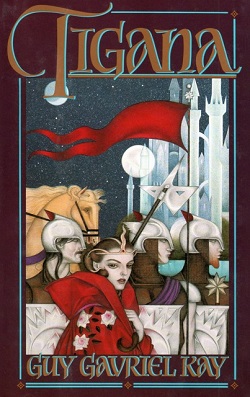




Σχόλια
Δημοσίευση σχολίου